CategoriesInsights

LSP PLAYBOOK 2025: What Shippers Want… and How Providers Win

These insights come from multi-year conversations with executives across automotive, tech, consumer sectors and logistics, including beverage and oil & gas.

The message is consistent: supply chain has moved to the boardroom. Shippers now buy outcomes, not activity, and they expect LSPs to demonstrate value with hard numbers rather than polished decks.

What shippers value

Shippers focus on P&L impact. They want clear improvements in on time, in full (OTIF), cost per unit, inventory days and CO₂ per shipment. They expect LSPs to get the basics right first — safe, reliable teams supported by consistent SOPs, and only then introduce technology that accelerates and simplifies decisions. Clean, shareable data with clear Source–Make–Deliver ownership is more important than any “digital” label.

Standardisation and early collaboration are also priorities. Joint design beats RFQ ping-pong, and contracts that include gain-sharing encourage real innovation. At the same time, the EV transition is reshaping expectations. LSPs must operate dual ICE/BEV fleets, comply with dangerous goods (DG) rules, manage weight/axle constraints, handle battery flows and provide charging in yards. Sustainability has become a core operational KPI: higher fill rates, smarter modes and tighter networks reduce carbon and cost in tandem. And across all of this, sector fluency matters. Specialists who understand regulations and distribution rhythms often outperform generic scale.

How LSPs win

The LSPs that stand out are those who prove their impact with transparent, recent numbers. They bring redesign ideas before the RFQ and propose gain-sharing where it fits. They publish their EV and DG readiness, from yard charging strategy to high-voltage training, and run a consistent exception cadence that protects sold orders. They use AI where it already delivers results: cleaning data, improving ETA accuracy and triaging exceptions. They also make integration painless with APIs, clean EDI and shared control-tower views. Commercially, they price what they can guarantee, build in corridors for volatile inputs and tie innovation fees to measurable outcomes.

Finally, they show the depth of their team via named leads, cross-training and succession planning.

90-day quick wins

Early wins are available. A sold-order “fast lane” with clear milestones can reduce lead times and raise hit rates. A disciplined consolidation calendar lifts fill rates and lowers both cost and CO₂. Basic EV yard upgrades such as marked BEV bays, mobile charging, adjusted load plans and DG rehearsals, build credibility fast. A lightweight exception-triage bot can summarise issues and pre-fill communications. And carbon should be made auditable from the start, with a clear method, a current baseline and monthly tracking of fill and mode.

Common pitfalls

LSPs often stumble when they lead with scale instead of sector fit, sell buzzwords instead of outcomes, or burn teams on tactical heroics while core flows remain broken. Other traps include vague data terms that stall procurement and bespoke country processes that undermine standardisation.

Your 6–18-month roadmap

The path forward starts with a “control-tower lite” model: shared visibility, exception rules and then predictive ETA and auditable CO₂. Build vertical playbooks under a common core, refresh contracts to include gain-sharing and innovation sprints, and invest in a people pipeline that blends operations and data skills. Finally, scale up EV readiness across your footprint: charging infrastructure, DG training and reverse logistics for batteries.

Why this matters

Shippers have more choice than ever. The providers who win combine sector expertise with standardisation, measurable P&L impact and easy integration. They aren’t just moving product, they’re protecting revenue, lifting margins and reducing risk for their customers.

CategoriesInsights

SUPPLY CHAIN LEADERSHIP: What’s working, what isn’t, and what leaders should do next

A synthesis of executive interviews across automotive, tech, consumer and logistics: what’s working, what isn’t, and what leaders should do next.

Over the past few years, I’ve interviewed senior leaders across automotive, tech, consumer and logistics. Different industries, same message: supply chain has moved from back office to boardroom. Here’s a plain-English summary of what works, what doesn’t, and what to do now.

Supply Chain Strategy

Supply chain now shapes revenue, margin and the customer experience. Treat it as a competitive capability, not a cost line. The leaders who win show P&L impact, not just activity.

People first

Performance starts with people: safety, fair pay, good tools and leaders who don’t micromanage. Trust, and promises kept, move work forward faster than any system.

Data before “digital”

Before buying AI, fix the basics: clean, shared data and clear Source–Make–Deliver ownership. If the data and process logic are shaky, automation only scales the noise.

Standardise and collaborate

“One way, best way” beats local tweaks. Shared standards (including emissions reporting) and genuine OEM–supplier/LSP partnerships cut waste, reduce risk and speed decisions. Contracts should reward innovation, not just the lowest rate.

Learn across sectors

Bring automotive’s rigour and cost discipline, and borrow retail/FMCG speed and customer proximity. Cross-industry learning is often the quickest route to workable ideas.

Sustainability as an operating metric

Carbon is becoming a monthly KPI. Many “green” moves such as higher fill, better network design, smarter modes, also save money. Make CO₂ a decision input, not a press release.

Electrification is redesign, not reinvention

EVs change weight, safety and charging needs; batteries bring dangerous-goods constraints. Most networks can adapt with yard and process redesign. Expect a long overlap of ICE and BEV fleets and plan service, parts and logistics accordingly.

The sticking points

  • Fragile tiers: Chips, chemicals and upstream constraints exposed shallow visibility and slow run-out decisions.

  • Silos and legacy systems: M&A adds data debt; “digital” fails without discipline.

  • Outbound pinch: Finished-vehicle logistics is tight, specialised and fragmented; complexity is rising.

  • Talent gaps: We need leaders fluent in software and operations.

  • Carbon accounting: Methods are inconsistent; audit-ready standards are still maturing.

  • EV infrastructure: Public and compound charging lag; battery DG rules limit premium expedites.

  • Geopolitics and infrastructure strain: Shifting trade lanes and congested ports/rail/roads add cost and risk.

What works: the practical playbook

  • Measure like finance: Build certified baselines for cost, service and CO₂; track progress as you track cash.

  • Run end-to-end: Daily tier reviews, shared KPIs and inventory positions, and systematised run-out decisions.

  • Think global, act local: Central standards; agile regional execution.

  • Redesign flows, don’t just squeeze: Fix the data model and core process logic rather than hunting 2–3% productivity at the edges.

  • Invite partner ideas and pay for them: Gain-sharing and flexible contracts unlock better answers.

  • Protect what matters: Prioritise sold orders over stock moves to reduce noise and waste.

  • Be EV-ready: Charging, battery handling, temperature and fire protocols, training, and reverse logistics for packs/modules.

  • Tell the P&L story: Link availability and service to revenue, loyalty and margin.

Where the opportunity is

  • AI for planning and exceptions once the data foundation is sound.

  • Cleaner, smarter ocean shipping now (routing/port-call optimisation); alternative fuels as they scale.

  • More regional, flexible networks with smaller asset footprints.

  • Used-car logistics and hybrid sales models as direct and dealer channels converge.

  • Circular, pooled packaging to raise density and cut cost/CO₂.

  • Cross-OEM collaboration on standards, lanes and capacity where it makes sense.

What leaders should do now

  1. Lock in data discipline and make Source–Make–Deliver ownership explicit.

  2. Treat sustainability as cost, risk and growth, not a side project.

  3. Upskill teams in analytics and software; hire for “bits + atoms.”

  4. Align incentives with partners so innovation pays for both sides.

  5. Plan for the dual-fleet decade and design EV logistics deliberately.

  6. Keep the board narrative simple: revenue protected, margin lifted, risk reduced.

CategoriesInsights

PACKAGING: Industry Survey | What the Industry Really Thinks About Automotive Packaging

Unfiltered insights from OEMs, tier suppliers, and logistics leaders

Thank you to everyone who took part in our third annual survey on Automotive Packaging and Container Management.
This survey is proudly supported by Tri-Wall Circular – global leaders in sustainable packaging solutions.

At LConnect, I’ve been speaking directly with stakeholders across the automotive supply chain, from packaging engineers and logistics managers to sustainability leads and procurement heads, to uncover the most pressing challenges in packaging and container management today.

This isn’t analysis driven by assumptions. It’s a real-world snapshot of where the friction lies, captured in their own words. Below, I’ve outlined the seven most consistently raised issues (ranked by frequency and urgency) as shared by those on the front line.

What Keeps the Industry Awake at Night: A Summary of Top 2025 Challenges

Across dozens of responses, a few clear themes emerged. And notably, many of them haven’t changed since 2021, but the urgency around them has grown dramatically.

1. Container Loss, Damage & Lack of Visibility

Still the most cited issue. Containers go missing, get hoarded by suppliers, or return damaged with no accountability. Many still rely on spreadsheets to manage multimillion-euro assets.

“We track containers in Excel, so they go missing or sit broken for weeks with no one owning the problem.”

Takeaway: The call for real-time tracking, such as RFID, GPS, digital twins, is louder than ever. But this isn’t just about tech. It’s about changing the mindset: treating packaging like a production asset, not a throwaway crate.

2. Damage in Transit and Storage

From warehouse mishandling to moisture ingress (“container rain”), damage, especially to high-finish parts, is still too common.

“We treat packaging like junk, then blame the packaging when parts arrive damaged.”

Takeaway: Companies need better protective design aligned with real-world logistics, not just lab-tested theories.

3. Rising Costs and Cancelled Orders

Steel, resin, freight, input costs have soared. Some suppliers have cancelled packaging orders entirely. Others are scrambling to redesign with more cost-effective materials.

“The cost of packaging is now a barrier to even shipping parts.”

Takeaway: Firms are rethinking the entire cost model, exploring pooled systems, rentals, and material swaps to contain spend without compromising protection.

4. Lack of Strategic Thinking

Packaging is still too often treated as an afterthought, brought in only once damage has occurred or when transport is already planned.

“Other departments just see ‘a box. We’re trying to manage an entire ecosystem.”

Takeaway: Packaging needs a seat at the table from day one, alongside tooling, sourcing, and logistics. Every delay in integrating packaging increases the risk and cost downstream.

5. Resource Constraints & Legacy Thinking

Teams are stretched. New designs get deprioritised. Even when better solutions exist, legacy approaches win out due to lack of time and bandwidth.

“Packaging decisions get made by default, not by design.”

Tomorrow’s Risks Start Today

When asked about future challenges, respondents identified four major areas:

1. Regulatory Pressure (e.g., EU’s PPWR)

Compliance is no longer optional. The Packaging and Packaging Waste Regulation (PPWR) has made recyclability, reusability, and traceability a board-level concern.

“Sustainability used to be aspirational. Now it’s enforceable.”

2. Global Sourcing Driving One-Way Waste

With EV production ramping up in Asia and new sourcing footprints emerging, returnable packaging is being sidelined. The result? Rising costs, carbon output, and waste.

“We’ve globalised sourcing but not packaging. That means tonnes of scrapped containers.”

3. Automation Compatibility

Packaging needs to evolve for robotic handling, vision systems, and automation, but most current designs haven’t caught up.

4. Lack of Cross-OEM Collaboration

Despite the potential for shared systems, OEMs and suppliers still struggle to collaborate effectively on pooling or standardisation.

“Without collaboration, we’re stuck with waste and inefficiency.”

The Three-Year View: What’s Changed Since 2021?

One of the most telling parts of running the Automotive Packaging and Container Management Survey every two years is being able to track how sentiment, strategy, and operational realities shift (or don’t!) over time.

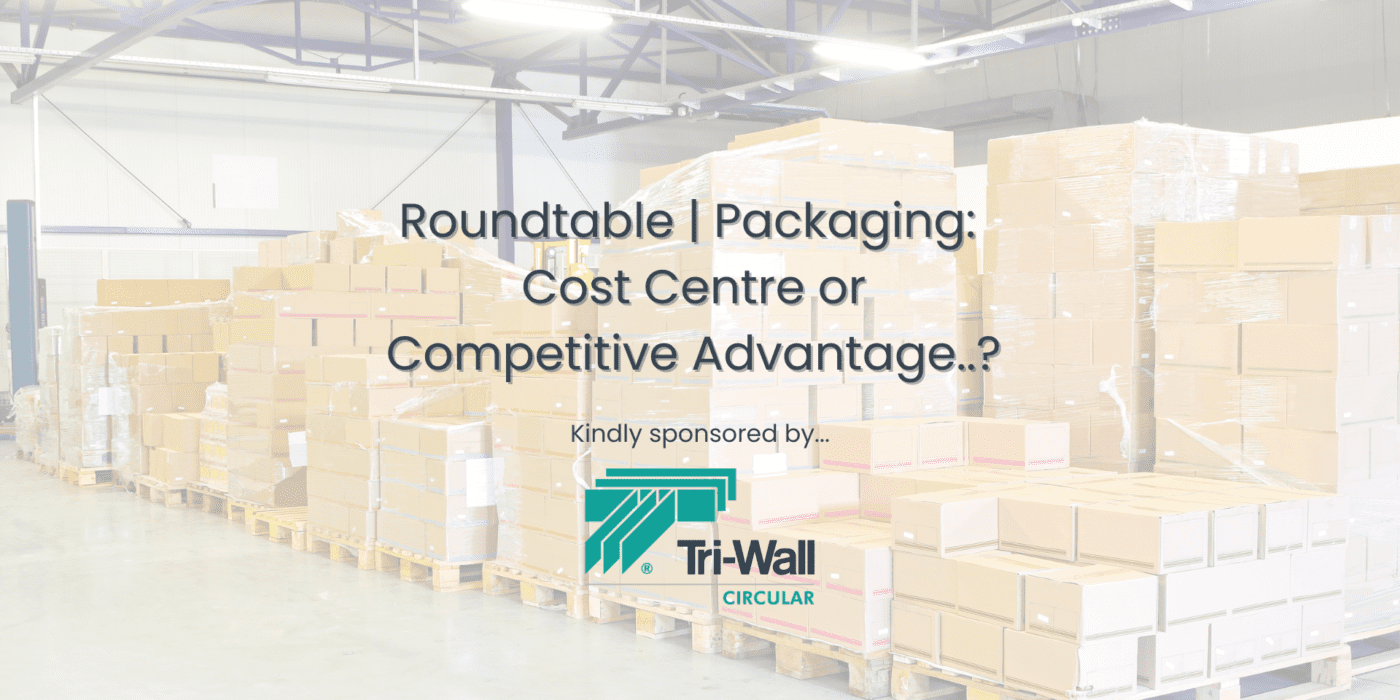
Looking across the 2021, 2023, and 2025 surveys, a pattern emerges: awareness is rising, but execution is still catching up. The industry now knows it has a packaging problem. But whether it’s equipped and resourced to solve it at scale is another question.

From Logistics Concern to Boardroom Topic

In 2021, packaging was still seen primarily as a logistics task: operational, transactional, and low-visibility. Senior executives weren’t particularly engaged unless there was a major cost spike or quality failure.

Fast-forward to 2025, and the tone has shifted. Packaging is now firmly on the radar of C-suite leaders, driven by rising costs, ESG commitments, and regulatory exposure. Yet respondents remain frustrated by a lack of clear leadership and ownership.

“Packaging is on the agenda, but no one owns it. Everyone has an opinion, but no one has a plan.”

This disconnect between visibility and responsibility is one of the defining features of the 2025 data. Senior interest is welcome, but without structural accountability, progress remains fragmented.

Sustainability: From Aspirational to Enforceable

Sustainability has evolved from a side conversation to a strategic imperative. In 2021, “eco-friendly packaging” was largely aspirational, something nice to aim for when time and budget allowed.

By 2023, we saw the first real movement. More companies experimenting with cardboard alternatives, higher truck fill rates, and reusable systems. But it was still mostly self-driven.

Now, in 2025, regulation is taking the lead. The EU’s Packaging and Packaging Waste Regulation (PPWR) is pushing packaging compliance to the top of the agenda, with companies facing increasing pressure to demonstrate recyclability, reduce volume, and account for lifecycle impact.

“Sustainability used to be about image. Now it’s about compliance. And cost. And risk.”

The urgency is palpable, particularly in Europe, but also growing in North America and Asia, where global suppliers are trying to meet divergent standards across multiple markets. The risk of inaction has become too great.

Technology: Still in Trial, Not Yet Transformative

Technology is another area where expectations are outpacing adoption.

In 2021, most respondents were unsure where to start. Tracking technologies (think RFID, barcoding, GPS) were seen as expensive or complex. By 2023, attitudes had warmed: companies were running pilot programmes, exploring smart packaging, and considering IoT and AI for predictive tracking.

By 2025, the appetite is there, but the rollout remains inconsistent. Digital twins, AI-based container forecasting, and integrated visibility platforms are emerging, but typically in isolated cases, not enterprise-wide deployments.

“We have a pilot for every problem, but no one wants to scale anything.”

The lack of standardisation, coupled with siloed budgets, remains a major barrier. Until packaging tech is embedded in cross-functional strategy, within procurement, logistics, sustainability and IT, it risks remaining a perpetual ‘future fix.’

Battery Packaging: The Disruptor No One Fully Anticipated

Perhaps the biggest curveball to emerge in the 2023 and 2025 surveys is the logistical impact of battery and EV component packaging.

In 2021, it was barely mentioned. By 2023, it had become a known challenge. In 2025, it’s seen as a serious disruptor. Battery modules and EV parts bring unprecedented size, weight, and safety concerns. They require specialised packaging, thermal insulation, and rigorous handling protocols.

“Battery packaging is where we realise how little we’ve modernised the system.”

It’s not just a packaging issue; it’s a network design issue. These parts don’t move like traditional components, and their packaging doesn’t return or recycle in the same way. Most existing systems weren’t built for this scale or risk profile.

This is where the gap between innovation and infrastructure becomes particularly stark.

Leadership and Ownership: Still the Missing Link

Across all three surveys, one constant remains: no one really owns packaging. Logistics teams manage it, engineers spec it, procurement buys it, and sustainability teams critique it, and yet no one is accountable end-to-end.

In 2025, this is still the case. And the consequences are familiar: duplicated designs, unused returnables, reactive fire-fighting, and missed opportunities for collaboration.

“Packaging is like the orphan child of the supply chain – everyone sees it, but no one wants to raise it.”

The industry knows it needs a more coordinated, cross-functional approach. But the leadership structures and incentives haven’t yet caught up.

The Core Message

Packaging has made huge strides in visibility over the past four years, but the operational maturity still lags. It’s moved from a logistics line item to a compliance risk, a cost pressure, and a sustainability lever. And yet, many of the same frustrations remain unresolved.

The insight that emerged from the 2021 survey still rings true today, but it’s taken on new weight and urgency:

“Packaging is not just a box. It’s a system and it needs to be treated like one.”
Survey summary

Final Thought: Time to Raise the Game

There’s one thing I’ve consistently seen since I first stumbled into the world of automotive packaging: it only gets attention when something goes wrong.

That’s no longer good enough. As the industry faces regulatory pressure, supply chain complexity, and ESG accountability, packaging must be treated with the strategic importance it deserves.

It’s time we stop calling packaging an afterthought. It’s time we recognise it for what it is: an essential part of product quality, logistics performance, sustainability, and cost control.

If you’re facing similar challenges, exploring collaborative solutions, or simply want to share your own experiences, I’d love to hear from you – louis@lconnect.co.uk.

Thanks again to everyone who contributed to the survey. You’re helping us move the conversation forward.

Next Step: Follow-up webinar

We’ll be hosting a short follow-up webinar to discuss the results and hear reactions from across the industry, so keep an eye on our Interviews page for this.

Thanks to Tri-Wall Circular for supporting this initiative and helping shine a light on packaging’s role in driving supply chain performance and sustainability.
success automotive industry
CategoriesAutomotive Insights, Insights

How do we ensure success in the automotive industry?

The automotive industry is constantly evolving

With the automotive industry evolving, supply chain and logistics leaders need to adapt to the changes to ensure success. Here are some key pieces of advice we have gained from global automotive supply chain and logistics leaders for the leaders of the future:

1. Embrace Change

The VUCA (volatile, uncertain, complex, and ambiguous) world demands supply chain and logistics leaders to be adaptable to new energy, new products, and new technologies.

2. Focus on Supply Chain Resilience

Supply chain needs to be flexible, resilient, sustainable, and reliable. Logistics is a people’s business, so even if automation, AI, and digitalization are implemented, the human element cannot be ignored.

3. Develop Curiosity

Curiosity is a key trait for supply chain and logistics leaders. They should learn by doing, rather than just relying on PowerPoint presentations. Working in logistics provides an excellent opportunity to experience different cultures and languages.

4. Be Sustainable

Supply chain and logistics leaders can change the world by implementing sustainability measures. Logistics should be more present in daily life, and this can be achieved by promoting the importance of logistics to the wider public.

5. Stay Up to Date with Technology

Digitalization, automation, and real-time tracking are essential for the future of logistics. Logistics leaders should develop and monitor their understanding of new technologies, digitalization techniques, and data management.

6. Focus on Leadership Development

Leadership skills are essential for supply chain and logistics leaders. They should seek training, courses, and tools to work with the younger workforce that is emerging.

7. Understand the Industry

Supply chain leaders should understand every step, link, and component in the supply chain, from internal processes to logistics service providers. This understanding will enable them to solve any challenge that comes their way.

8. Be Agile

The future requires agility, which doesn’t always align with commercial interests. Supply chain leaders should be quick to adapt to changes and not rely too much on all-in-one solutions or control towers.

9. Think Globally

Supply chain leaders should think globally and embrace diversity, both in terms of people and where and how they work. They should also balance between managing people and embracing new technology.

10. Expect the Unexpected

Supply chain leaders should build resilient supply chains to overcome unexpected events. The VUCA environment will continue, so they need to stay on their toes.

11. Focus on Data Quality

Supply chain can work like clockwork, but it requires master data quality, process discipline, and data management. This will eliminate politics and lead to intangible benefits.

If you would like to discuss any of these points in our next ‘In Conversation with’ interview, contact Louis at louis@lconnect.co.uk.

Stay Connected

Subscribe to the LConnect Newsletter
A comprehensive resource for industry specialists covering the latest automotive logistics news and insights.

Copyright © 2022 LConnect
Copyright © 2025 LConnect. All Rights Reserved  |  Privacy Policy  |  Cookies Policy